

New report calls for Protected Landscapes to be recognised as national health infrastructure
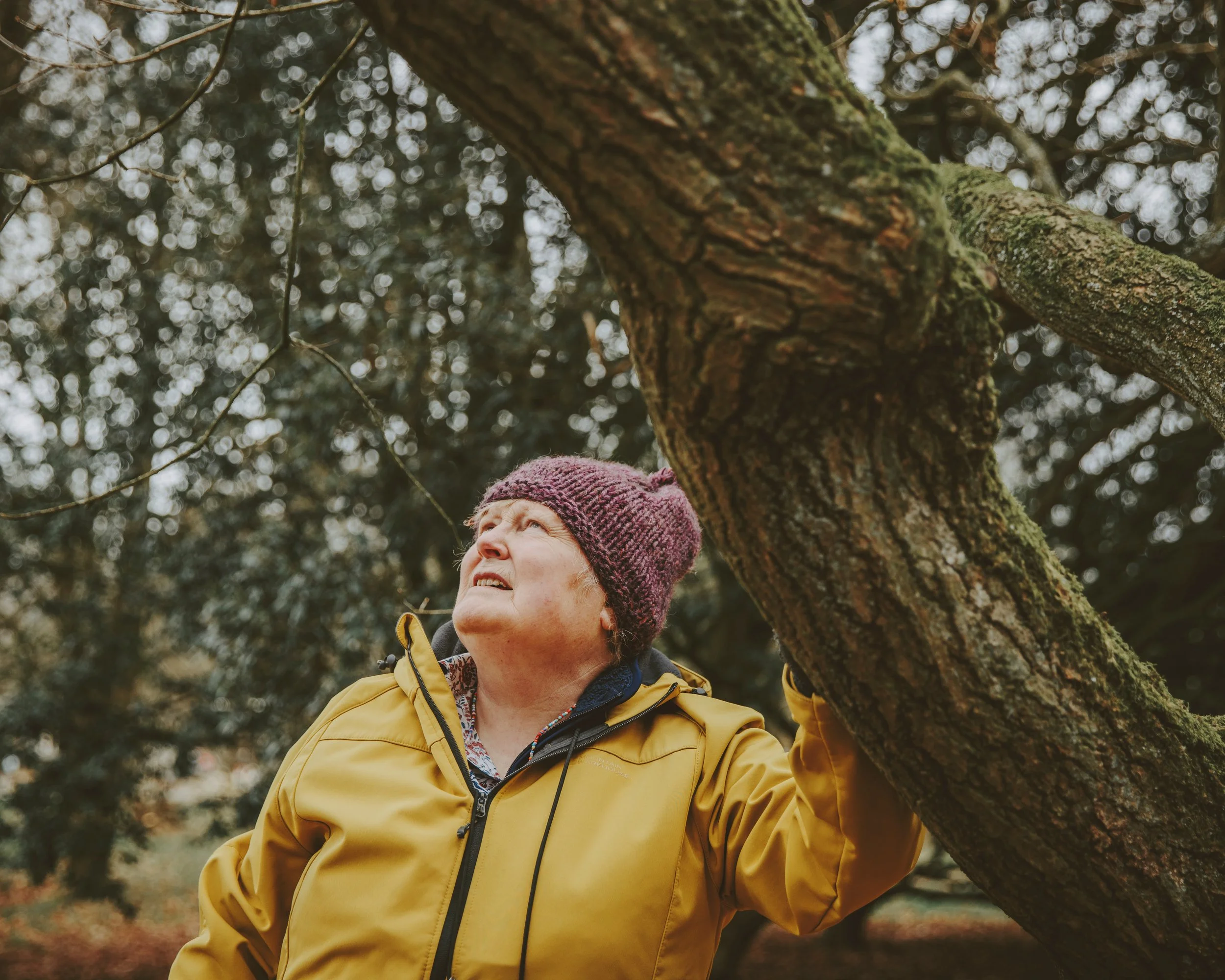
Participant attending a 10 week nature intervention session delivered through the Natural Health Service for North Yorkshire in the Howardian Hills National Landscape. Credit: Matt Storm (2026) for the Natural Health Service for North Yorkshire.
Protected Landscapes should be formally recognised as a core part of the UK’s national infrastructure supporting health, prevention, and community wellbeing, according to a major new report released today (Wednesday 3 June 2026).
Report calls for Protected Landscapes to be recognised as national health infrastructure
UK’s first Protected Landscape-led Natural Health Service delivers measurable changes in outcomes, including a 24% increase in mental wellbeing and a 15% reduction in loneliness
Model supports NHS shift from treatment to prevention
£100,000 pilot secures further £550,000 to scale programme
The report sets out compelling evidence that nature-based health programmes delivered across National Parks and National Landscapes can significantly improve mental, physical, and social wellbeing, while supporting the NHS’s shift from treatment to prevention.
It comes at a critical time. A recent Health Foundation report (1) shows that while people are living longer, the number of years spent in good health is declining. At the same time, loneliness is increasingly recognised as a growing public health challenge, strongly linked to poor mental health, reduced wellbeing, and lower levels of physical activity.
The new report highlights the success of the UK’s first Protected Landscape-led Natural Health Service, demonstrating how the nation’s protected natural landscapes can play a more substantive in delivering improved public outcomes.
The pilot initiative, led by the North York Moors Trust, was supported by £100,000 from the York and North Yorkshire Combined Authority via the UK Government Shared Prosperity Fund. It brought together a partnership of public and charitable organisations across North Yorkshire during a trial that completed in March 2026.
Partners included the North York Moors National Park, Yorkshire Dales National Park, Howardian Hills National Landscape, and Nidderdale National Landscape. Together, they delivered a coordinated programme designed to reach those most at risk of poor health outcomes, including individuals experiencing isolation, long-term health conditions, cancer survivorship, unemployment, caring responsibilities, and members of the armed forces community.
By focusing on early intervention and prevention, the programme responds directly to national challenges—supporting people to improve their health before conditions escalate, to manage existing conditions positively, and to live more active lives.
James Metcalfe, Executive Director of the North York Moors Trust and Project Manager, said:
“We know that people are living longer, but not necessarily living well for longer, whilst loneliness and inactivity are rising placing growing pressure on our health system.
The Natural Health Service for North Yorkshire shows how connecting people with our National Parks and Landscapes can improve wellbeing, reduce isolation and help people stay healthier and more active for longer. If the nation is serious about prioritising prevention to improve long-term outcomes, then support for people should begin long before a hospital visit, GP appointment or crisis point and to us that starts in nature.
Our Protected Landscapes are known for their awe and beauty, but they were founded to create clean, green space for public health. We are showing how they are a vital part of our national health infrastructure and how they can play a proactive role in keeping well for longer, improving outcomes or supporting people through the challenges they face.”
A beneficiary of the programme, said:
“The Natural Health Service has really helped me and I will continue to use the resources provided. It has reminded me how much I need to be in nature to support my mental health wellbeing. I started the year thinking I may need to go on antidepressants but now I don’t feel that way at all. Thanks for reminding me how nature can heal”.
The report, produced by academics from York St John University, provides robust evidence that structured, supported engagement with nature in Protected Landscapes delivers meaningful improvements.
Evaluation, including data collection and interviews with participants and professionals across the sector, found that:
Mental wellbeing increased by 24%
Social wellbeing increased by 17.5%
Physical wellbeing increased by 13.5%
Loneliness reduced by 15.2%
Participants consistently reported feeling:
Calmer and less anxious
More socially connected to others and their communities
More confident and motivated
More inclined to be active outdoors,
A stronger appreciation of Protected Landscapes and their value.
Importantly, group-based activities in non-clinical environments helped individuals feel like “people, not patients” a shift that contributed to enhanced confidence, belonging, and engagement.
Dr Tom Ratcliffe, Lecturer in Sustainability, Tourism and Heritage Management, who led the research team at York St John University, said:
“Our evaluation shows unequivocally that the Natural Health Service for North Yorkshire works. In just ten weeks, participants experienced measurable improvements in mental and physical wellbeing, stronger social connection, and reduced loneliness. The evidence shows that when people engage with nature in a structured, inclusive and person-centred way, the benefits are substantial and wide ranging.
"Participants also developed a stronger sense of responsibility towards nature, recognising that small, positive actions can make a difference. Healthcare professionals also showed a clear demand for the green social prescribing model. The task now is to embed this approach so that green social prescribing becomes a routine part of prevention and early intervention across North Yorkshire’s Protected Landscapes and our wider health and care systems."
With almost one in four adults reporting feelings of loneliness often, always, or some of the time - and a further quarter experiencing loneliness occasionally – according to recent ONS data (2), there is substantial evidence linking social isolation to poorer mental and physical health outcomes according researchers (3). Tackling social connection has therefore become a key public health priority. The programme’s success in reducing loneliness while improving wellbeing demonstrates the role nature-based interventions can play in addressing this growing challenge.
Early evidence also shows that participants felt more ready to progress into volunteering, employment, and wider social participation, highlighting broader economic and societal benefits.
Matthew O’Sullivan, Health Promotion and Wellbeing Lead at North Yorkshire Council, said:
"Embedding the Natural Health Service for North Yorkshire into our Healthy You offer has provided participants with a meaningful and motivating way to connect with nature. We’ve seen people develop a renewed sense of purpose through simple activities - whether that’s spending time in their own garden, exploring local green spaces, or visiting national parks and landscapes. This has supported a positive shift in both physical activity and mental wellbeing, with many participants feeling fitter, more engaged, and more connected overall."
Ben Pryor, Advanced First Contact Mental Health Nurse, Tees, Esk and Wear NHS Foundation Trust, said:
"My job role involves regular assessment and contact with individuals experiencing significant mental distress in relation to anxiety, depression among other common or less common presenting complaints.
In my role I am continually striving to find pathways which are suitable, evidence based and effective in meeting people's needs and helping them in the management of their distress experienced whatever this may resemble. I strongly believe that the National Health Service for North Yorkshire is a fantastic opportunity and addition to the pathways we offer individual's as this strongly embraces the core values around Behavioural Activation, the benefits of exercise upon mental ill health and the opportunity to develop safe and therapeutic spaces which are cathartic to need and offer purpose as well as a place for solace and individual reflection. I cannot support this opportunity enough."
The programme marks a step change in how Protected Landscapes are understood, not simply as places to visit, but as vital health and wellbeing infrastructure that can actively contribute to national outcomes.
By working proactively with communities, rather than serving only visitors, the programme has shown how these landscapes can:
Support prevention and early intervention in health and social care
Contribute to public health and neighbourhood health models
Play a role in place-making and inclusive community development
As the UK faces rising health challenges, including declining healthy life expectancy and increasing levels of loneliness, the report highlights the need for preventative, community-based approaches that address both physical and social determinants of health. This closely aligns with the NHS’s long-term strategic direction, which emphasises a shift from treatment to prevention and from hospital-based care to community-led support.
The Natural Health Service model demonstrates how Protected Landscapes can directly support these ambitions by reducing pressure on traditional services and offering accessible, non-clinical pathways to better health.
The programme also invested in workforce development, delivering training for professionals across health, housing, employment, debt advice, and community services.
Support for the approach was overwhelming among professionals who undertook the training:
99% of professionals agreed nature benefits mental wellbeing
96% agreed it benefits physical wellbeing
Training significantly improved confidence in using green social prescribing and nature-based approaches
This demonstrates strong cross-sector appetite for integrating nature into service delivery.
However, the report also identified key barriers to scaling the model:
Unclear referral pathways
Limited awareness among professionals and the public
Insufficient integration into NHS systems
Short-term funding constraints
Building on the initial investment, these challenges are already being addressed in the programme’s next phase.
A further £550,000 of funding will support this expansion. David Skaith, Mayor of York and North Yorkshire, has committed support from his Active Travel Fund, enabling the programme to deepen its integration into health and community systems. The next phase aims to benefit more than 1,500 participants including adults, children, and families - and 400 professionals over the next 18 months.
David Skaith, Mayor of York and North Yorkshire, said:
“The results from our Natural Health Service are clear. People are feeling better, mentally and physically, more connected, and less alone. Just as importantly, both participants and professionals are backing this approach, showing real demand right across the country.
The conversation has moved on. This is not about whether it works, it’s about whether our systems are ready to support it. That means clearer referral pathways and long-term investment to make this part of everyday care. That’s why I’ve committed a further £550,000 to help partners build on this success and take it to the next stage.
What this programme shows is something bigger. Our Protected Landscapes are not just places of beauty - they are part of our national health infrastructure. They can help prevent ill health, ease pressure on services, and improve lives.
What we’ve built here is not just a local success story, it’s a model for the UK: using nature to help people live healthier, happier and more connected lives.”
As the UK continues to respond to growing pressures on health and care systems, including rising levels of poor mental health, inactivity, and social isolation, the integration of nature-based solutions offers a powerful, scalable opportunity to build healthier communities and help people live not just longer, but better.
ENDS
Notes to Editors
The full report on the Natural Health Service for North Yorkshire pilot can be found at this link.
Interviews are available with:
James Metcalfe, Executive Director, North York Moors Trust
David Skaith, Mayor of York and North Yorkshire
Dr Tom Ratcliffe, York St John University
References:
Health Foundation (April 2026) https://www.health.org.uk/reports-and-analysis/analysis/healthy-life-expectancy-trends-in-the-uk-a-watershed-moment
Office of National Statistics (February 2026) https://www.ons.gov.uk/peoplepopulationandcommunity/wellbeing/bulletins/publicopinionsandsocialtrendsgreatbritain/january2026
Wang, J., Lloyd-Evans, B., Marston, L. et al, BMC Psychiatry (2018) https://link.springer.com/article/10.1186/s12888-018-1736-5